




MATERIAL COMPLIANCE
RoHS compliance: 10 substances, homogeneous materials and the technical file
The short answer
RoHS restricts 10 substances, including lead, mercury, cadmium and certain phthalates, in electrical and electronic equipment on the EU market. The limits apply to each homogeneous material, not to the total weight of the product. Compliance is shown through supplier declarations, risk-based analysis and a technical file kept up to date.
The 10 restricted substances and their limits
The RoHS Directive 2011/65/EU restricts the use of the substances listed in its Annex II in electrical and electronic equipment. Commission Delegated Directive (EU) 2015/863 added four phthalates, bringing the list to ten. The limit is 0.1 % by weight for lead, mercury, hexavalent chromium, PBB and PBDE as well as DEHP, BBP, DBP and DIBP, and 0.01 % for cadmium.
These values apply in homogeneous materials. The directive defines a homogeneous material as one of uniform composition throughout, or a combination of materials that cannot be separated into different materials by mechanical actions such as unscrewing, cutting, crushing or grinding. Cable insulation, a solder joint or a plastic housing are each assessed separately; an average over the whole product does not demonstrate compliance.
Check scope and exemptions product by product
RoHS covers electrical and electronic equipment in the categories listed in the directive, and its rules also apply to cables and to spare parts for repair. Some applications are excluded from the restriction for a limited time through the exemptions in Annexes III and IV. Because the scope and expiry of exemptions can change, record the number and validity date of every exemption you rely on.
The date from which the phthalate restriction applies to medical devices and to monitoring and control instruments differs from other products; Directive 2015/863 sets these transition dates separately. Deciding at the design stage which category the product falls into and which exemption it relies on reduces the risk of having to change materials later.
Show compliance together with your supply chain
Before affixing the CE marking, the manufacturer draws up the technical documentation and completes the conformity assessment based on internal production control. In practice the RoHS technical file is usually built on the risk-based approach of EN IEC 63000: a supplier declaration, material information and, where needed, an analysis report are collected for each material and component.
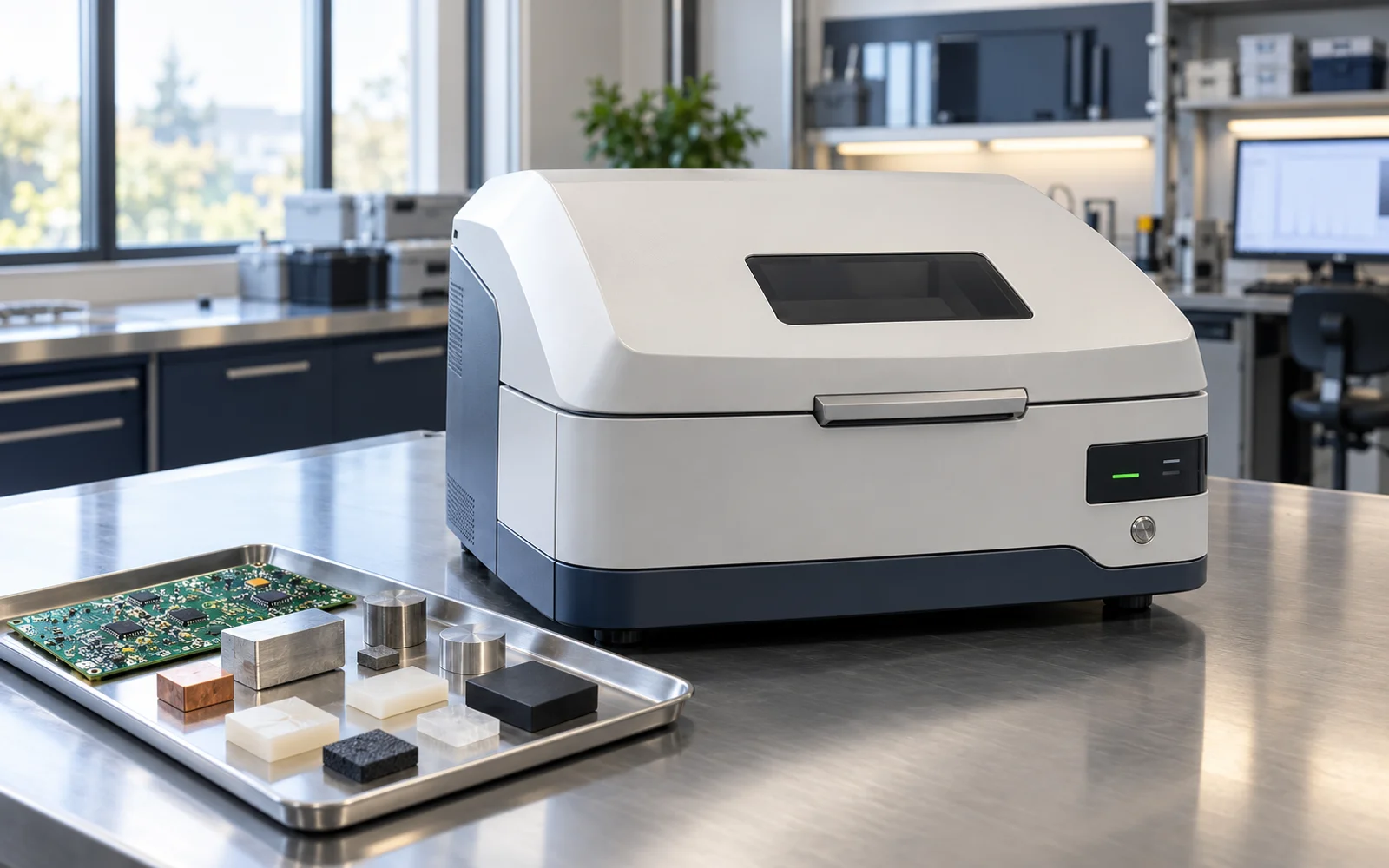
Analysing every component in a laboratory is usually not necessary. The supplier's reliability, the risk level of the material and the quality of the available documents are assessed together; for doubtful or high-risk materials, XRF screening and chemical analysis under the IEC 62321 series can be planned. The technical documentation and the EU declaration of conformity must be kept for ten years after the product is placed on the market.
Check before you close the file
- The RoHS category of the product and the date from which the rules apply are identified.
- The bill of materials (BOM) matches the version that will be sold.
- A supplier declaration or an analysis record is on file for every component.
- The number and validity of each exemption used are recorded.
- The analysis plan and results for high-risk materials have been reviewed.
- Someone is responsible for updating the file when a supplier or material changes.
RoHS compliance is not a certificate obtained once but a record kept throughout production. Even if the product stays the same, the assessment should be renewed when a supplier or component changes. National rules in Turkey and in other target markets should be checked separately.
Official sources
Sources checked:
- EUR-Lex · Directive 2011/65/EU (RoHS)
- EUR-Lex · Commission Delegated Directive (EU) 2015/863
- European Commission · RoHS Directive
Scope depends on the product, intended use and target market. This article does not constitute a product conformity decision.
NEXUSTEST
Let's plan your RoHS file around the product and its supply chain
Share the bill of materials, supplier documents and target market, and we will identify the analysis needs and gaps in the technical file together.
Discuss your project